
Roof leaks in Auckland commonly come down to seven causes: ageing materials, storm damage, blocked spouting, poor installation, trees, condensation and skipped maintenance. Finding the cause tells you whether a small fix will do or whether the roof is due for replacement.
Water that gets past a roof can soak insulation, rot timber framing and feed mould for months before a stain appears on the ceiling, putting the comfort, health and value of a home or workplace at risk.
HDK Long Run Roofing specialises in long run re-roofing across Auckland, so we see the results of all seven causes when we strip old roofs. Most leave clues you can check from the ground or the ceiling space.
Auckland combines heavy rain, strong wind and salty air. The city gets more than 1,000 mm of rain in a typical year, and plenty of it arrives with a gale behind it.
Wind-driven rain gets pushed uphill under laps, flashings and ridge caps that stay dry in calm weather. That is why many roofs leak only in a storm.
Auckland’s coastal environment also means salt can settle on roofs and contribute to corrosion on sheets, fixings and flashings. Clause E2 External Moisture of the New Zealand Building Code requires a roof to keep outside moisture out of the building, and coastal conditions wear down the parts that do that job.
Each cause leaves its own signs, which makes the source easier to pin down.
Age is behind a large share of the leaking roofs we quote on, and each material wears out differently:
Once an old roof leaks in several places, patching one spot tends to move the problem to the next weak point.
Strong gusts get under the edges of roofing sheets and ridge capping and bend them up far enough to let rain blow in. Hail and falling branches crack tiles and can dent or puncture older, thinner metal.
After a big blow, check the ridge line and the barge flashings on the gable ends from the ground. A lifted edge is often visible without climbing up.
When leaves and moss fill the spouting or a downpipe, rainwater overflows at the back edge and runs into the eaves and wall framing. On low-pitch roofs it can also creep back up under the laps. Spouting that is too small for the roof area overflows in heavy rain even when clean.
A roof can leak from its first winter if the details are wrong. The faults we find most often are:
Roof flashing around chimneys, skylights, vents and walls is where these faults show up first. The NZ Metal Roof and Wall Cladding Code of Practice sets the minimum pitch and lap for each profile, and roofs laid outside those limits are prone to leak.
Branches rubbing on a roof wear through the paint and coating, and falling limbs dent or puncture it. Leaves then pile up in valleys and spouting, holding moisture against the metal so it rusts from the top. Keeping branches trimmed back from the roofline reduces rubbing, falling debris and leaf build-up.
Some leaks start inside the house. Moist air from showers, cooking and clothes drying rises into the roof space, meets the cold underside of the roofing on a clear night and condenses, then drips onto the ceiling.
Modern long run roofing systems typically include roof underlay beneath the metal roofing. Many older Auckland roofs have no underlay, or paper underlay that has perished. Good roof ventilation moves moist air out before it condenses. Drips after a cold, clear night with no rain can point to condensation rather than an external roof leak.
A popped screw, a lifted flashing or a patch of surface rust is easy to deal with early and much harder once water has been getting in for a few winters. Areas the rain never washes, such as under eaves and behind parapets, collect salt that eats the coating. That is where rust and loose fasteners often appear first.
Our team can check your roof, tell you whether it is due for replacement and give you a free re-roofing quote.
Start inside, during or just after rain. Water runs along underlay, rafters and the top of the ceiling before it drops, so a stain can sit a metre or more from where the water gets in.
Stay off the roof. Wet metal is slippery, old tiles crack underfoot and brittle fibre cement can give way.
One leak with a clear cause, such as a lifted flashing, can usually be fixed on its own. When a roof leaks in several places, or the same leak returns after each fix, the roof has usually reached the end of its life. Signs it is time to re-roof:
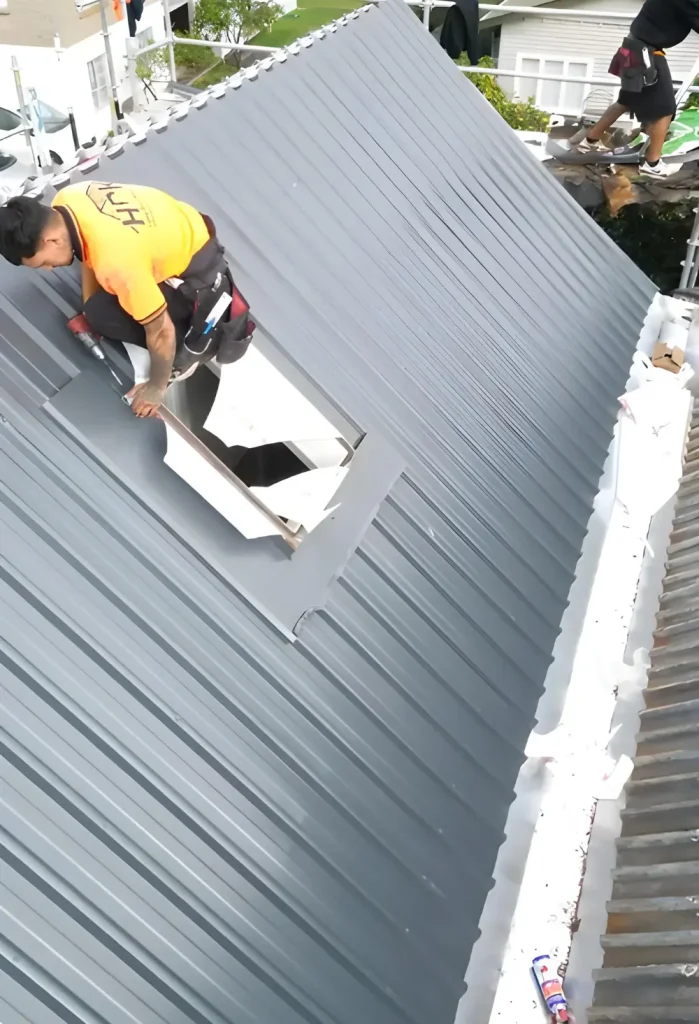
When the existing roof has reached the end of its life, a new long run roof replaces the ageing sheets, flashings, fixings and underlay that can contribute to recurring leaks. New spouting can also be included where needed. We only strip what we can replace and make watertight the same day, so the house stays dry throughout. Damaged timber can be replaced and a disused chimney removed during the same job.
Maintenance adds years to a sound roof. Once steel has rusted through or tiles have cracked across the roof, replacement is the lasting fix.
EXCELLENT Based on 17 reviews
 Posted on Google

 FETCH MEAbsolute killer team! Contacted Jesse for a quote, he had organised a site assessment, drew up a quote and executed the job very quickly. I wouldn’t look anywhere else. These guys will help you all the way through! CheersPosted on Google
 Kelly WangGarage side roof replacement. We reached out to several companies to inspect our roof and obtain quotes. It was challenging to get in touch with people since it was a mid-sized job and roofers are super busy. Jesse stood out as one of the best due to his prompt communication and very easy to deal with. Jesse and his team did an excellent job, delivering top-quality craftsmanship.Posted on Google
 Sipho NdlovuI had an outstanding experience with HDK Long Run Roofing. Their punctuality, clear communication, affordability, professionalism, speed, and friendliness were truly commendable. The end results exceeded our expectations, showcasing their dedication to quality work. I highly recommend their services.Posted on Google
 Blu StevenJesse and his team were great to deal with. They turned up on time, did the job expertly and efficiently, and invoiced as per the quote. Couldn’t have asked for anything more. Cheers HDK.Posted on Google
 Liam BrookyHDK replaced our entire roof and they did an absolute top job. Worked hard and committed to get it done in a timely manner and great guys to work with. Thanks all!Posted on Google
 Ashleigh Donald-busseyFull re-roof (iron) on my owner occupied 1920s home. Fantastic service from first contact right through to checking in following completion. The cheerful nature, quality of workmanship and professionalism made having Jesse’s team and their contracted scaffolders a pleasure to have on site. As a female home owner I’m always nervous about dealing with trades unless referred from friends and family, I could not recommend HDK highly enough and wish I’d engaged with them sooner. Love the sound of rain on the roof now I don’t have to worry about the leaks :)Posted on Google
 Lee RevellWhat a cheerful respectful professional team. I have absolutely no hesitation in recommending this crew to others. Thanks Jesse and Trinity you made a potentially stressful job a breeze.Posted on Google
 Georgia PrinceReplaced the roof with speed, efficiency, neatness and cheerful good humour. Jesse and his team are a pleasure to deal withPosted on Google
 Jenny ZhangAmazing service and communication with this team. They really go above and beyond with their work and I would definitely recommend using them!
LBP-qualified long run roofing specialists serving homes across north, west, east and south Auckland.
Auckland roofs have to deal with heavy rain, wind, coastal exposure and humidity. Over time, these conditions can expose weak flashings and laps, contribute to corrosion and increase condensation inside the roof space.
A roof that leaks only in heavy rain usually has a weak point that copes with light showers but not with volume or wind. Possible causes include short or lifted flashings, laps on a roof pitched too low for its profile and spouting that overflows. Noting the wind direction each time narrows down where to look.
Many can. Cleaning the spouting, washing unwashed areas, trimming trees and checking the roof after storms all reduce the risk. On an old roof where rust or cracking has spread, replacement is the long-term fix.
The cost depends on the cause and how long water has been getting in, because hidden damage to timber, insulation and ceilings adds up. If the roof needs replacing, the main factors behind re-roofing costs in NZ are roof size, pitch, access and the profile you choose. Contact HDK Long Run Roofing for an accurate quote. All pricing is confirmed before any work begins, with no obligation to proceed.
Look for water stains, bubbling paint or a sagging ceiling inside, and rust streaks, lifted flashings or overflowing spouting outside. In the roof space, daylight through the roofing or dark marks on timber point to a leak. Spotting these early gives you time to plan before the damage spreads.
Yes. HDK Long Run Roofing converts tile roofs in Auckland to long run metal, often with new spouting at the same time. We work in metal only, so we do not repair tile roofs. Where replacement is the right option, a tile-to-metal conversion removes the existing tile roofing before the new long run system is installed. Long run metal is also far lighter than concrete tile, which reduces the load on the roof framing.