
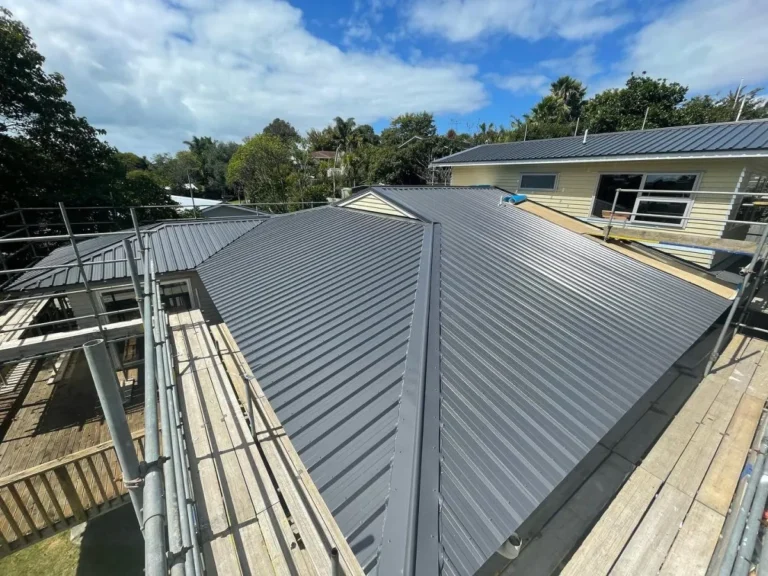
Metal roofs are a common sight across Auckland for both residential and commercial properties. Their strength, weather resistance, and long lifespan make them a practical choice. Yet, like any building material, metal roofing can develop issues over time if it is not installed, maintained, or inspected correctly. Understanding common metal roof problems helps property owners identify early warning signs and take the right steps to prevent costly repairs later.
A well-installed metal roof can last several decades, but its longevity depends on maintenance and environmental factors. Auckland’s weather conditions, including high rainfall, humidity, and coastal air, can all affect performance. Knowing the main causes of roofing problems and solutions allows building owners to manage their roofs effectively, maintain structural integrity, and extend service life.
Leaks remain one of the most frequent metal roof problems. They often occur around penetrations, seams, or joints where sealants and flashings have deteriorated. Heavy rain, combined with wind pressure, can drive water into these weak spots, leading to corrosion, damp insulation, and internal damage.
Causes include:
Prevention:
Regular roof inspections can help detect leaks early. Resealing vulnerable areas and tightening or replacing loose fasteners are effective ways to maintain waterproofing performance.
Corrosion is another major issue in coastal regions like Auckland, where salt air accelerates oxidation on metal surfaces. Once the protective coating on the roof begins to wear off, the base metal becomes exposed to moisture, leading to rust and pitting.
Typical signs:
Solutions:
Cleaning and recoating affected areas can restore protection. Using marine-grade materials during installation and applying suitable paint systems for local conditions can reduce the likelihood of corrosion.
Fasteners hold roof sheets firmly in place, but they can become loose over time due to temperature changes and metal expansion. When this happens, sheets may move slightly, allowing water to enter or panels to lift during strong winds.
Indicators:
Maintenance tip:
Periodic inspections to check fastener tightness and washer condition are recommended. Replacing corroded or incompatible fasteners helps maintain the roof’s performance and appearance.
Oil canning refers to visible waviness or rippling in flat metal panels. While this is often a visual concern rather than a structural fault, it can indicate stress within the roofing system. It may result from improper panel handling, installation under tension, or natural expansion and contraction of metal.
Main causes:
Minimising the issue:
Choosing the right metal thickness, correct panel profile, and careful installation can reduce the likelihood of surface distortion.
When different metals come into contact, a chemical reaction known as galvanic corrosion can occur. This happens when rainwater carries ions between two dissimilar metals, causing one to corrode faster. In Auckland’s humid and salty environment, this process can be accelerated.
Examples include:
Prevention:
Use uniform materials throughout the roofing system. Separating dissimilar metals with appropriate sealants or isolators can prevent chemical interaction.
The protective coating on metal roofs is designed to resist UV rays and moisture. Over time, sun exposure, pollution, and rainfall cause the surface to fade or chalk, leaving a powdery residue. This can affect both appearance and durability.
Warning signs:
Maintenance approach:
Cleaning the roof regularly and applying a fresh coat of paint or protective finish can help restore UV resistance and extend lifespan.
Improper installation remains one of the key causes of metal roof problems. Errors such as incorrect sheet overlap, insufficient pitch, or the use of unsuitable materials can lead to long-term performance issues. Additionally, neglecting regular maintenance allows small defects to worsen.
Common issues include:
Prevention:
Follow the manufacturer’s recommendations and NZ roofing standards for installation and care. Scheduling annual inspections can prevent minor defects from turning into significant repairs.
Identifying problems early can significantly reduce repair costs and prevent disruption to daily operations. Addressing roofing problems and solutions quickly ensures a watertight, energy-efficient, and long-lasting roof. Preventive maintenance is always more cost-effective than reactive repairs.
Metal roofing remains a reliable choice for Auckland properties, but it requires attention to detail and regular upkeep. Understanding the common metal roof problems and how to prevent them helps maintain a safe and durable structure. With the right materials, proper installation, and consistent maintenance, metal roofs can perform well for decades in New Zealand’s variable climate.
If you are dealing with metal roof problems, we can help. At HDK Long Run Roofing, we specialise in Re-Roofing, New Roofs, and Metal Wall Cladding across Auckland. Our team takes the time to assess your roof, recommend practical roofing problems and solutions, and ensure your property is protected for years to come.
Get in touch with us today to book an inspection or request a quote.
EXCELLENTTrustindex verifies that the original source of the review is Google. Absolute killer team! Contacted Jesse for a quote, he had organised a site assessment, drew up a quote and executed the job very quickly. I wouldn’t look anywhere else. These guys will help you all the way through! CheersPosted on GoogleTrustindex verifies that the original source of the review is Google. Garage side roof replacement. We reached out to several companies to inspect our roof and obtain quotes. It was challenging to get in touch with people since it was a mid-sized job and roofers are super busy. Jesse stood out as one of the best due to his prompt communication and very easy to deal with. Jesse and his team did an excellent job, delivering top-quality craftsmanship.Posted on GoogleTrustindex verifies that the original source of the review is Google. I had an outstanding experience with HDK Long Run Roofing. Their punctuality, clear communication, affordability, professionalism, speed, and friendliness were truly commendable. The end results exceeded our expectations, showcasing their dedication to quality work. I highly recommend their services.Posted on GoogleTrustindex verifies that the original source of the review is Google. Jesse and his team were great to deal with. They turned up on time, did the job expertly and efficiently, and invoiced as per the quote. Couldn’t have asked for anything more. Cheers HDK.Posted on GoogleTrustindex verifies that the original source of the review is Google. HDK replaced our entire roof and they did an absolute top job. Worked hard and committed to get it done in a timely manner and great guys to work with. Thanks all!Posted on GoogleTrustindex verifies that the original source of the review is Google. Full re-roof (iron) on my owner occupied 1920s home. Fantastic service from first contact right through to checking in following completion. The cheerful nature, quality of workmanship and professionalism made having Jesse’s team and their contracted scaffolders a pleasure to have on site. As a female home owner I’m always nervous about dealing with trades unless referred from friends and family, I could not recommend HDK highly enough and wish I’d engaged with them sooner. Love the sound of rain on the roof now I don’t have to worry about the leaks :)Posted on GoogleTrustindex verifies that the original source of the review is Google. What a cheerful respectful professional team. I have absolutely no hesitation in recommending this crew to others. Thanks Jesse and Trinity you made a potentially stressful job a breeze.Posted on GoogleTrustindex verifies that the original source of the review is Google. Replaced the roof with speed, efficiency, neatness and cheerful good humour. Jesse and his team are a pleasure to deal withPosted on GoogleTrustindex verifies that the original source of the review is Google. Amazing service and communication with this team. They really go above and beyond with their work and I would definitely recommend using them!
The most frequent issues include leaks, corrosion, loose fasteners, surface distortion, and coating degradation.
With proper installation and maintenance, a metal roof can last between 40 and 60 years.
Rust occurs when the protective coating is damaged or worn, exposing the metal to moisture and oxygen.
An annual inspection and cleaning are recommended to identify small issues before they escalate.
Not always. Ageing materials, loose fasteners, and harsh weather can also cause leaks over time.
It is a chemical reaction that occurs when dissimilar metals come into contact, leading to accelerated corrosion.
In most cases, oil canning is aesthetic and not structurally harmful, but professional assessment can confirm this.
Use quality materials, follow proper installation guidelines, and schedule regular roof maintenance for long-term protection.