
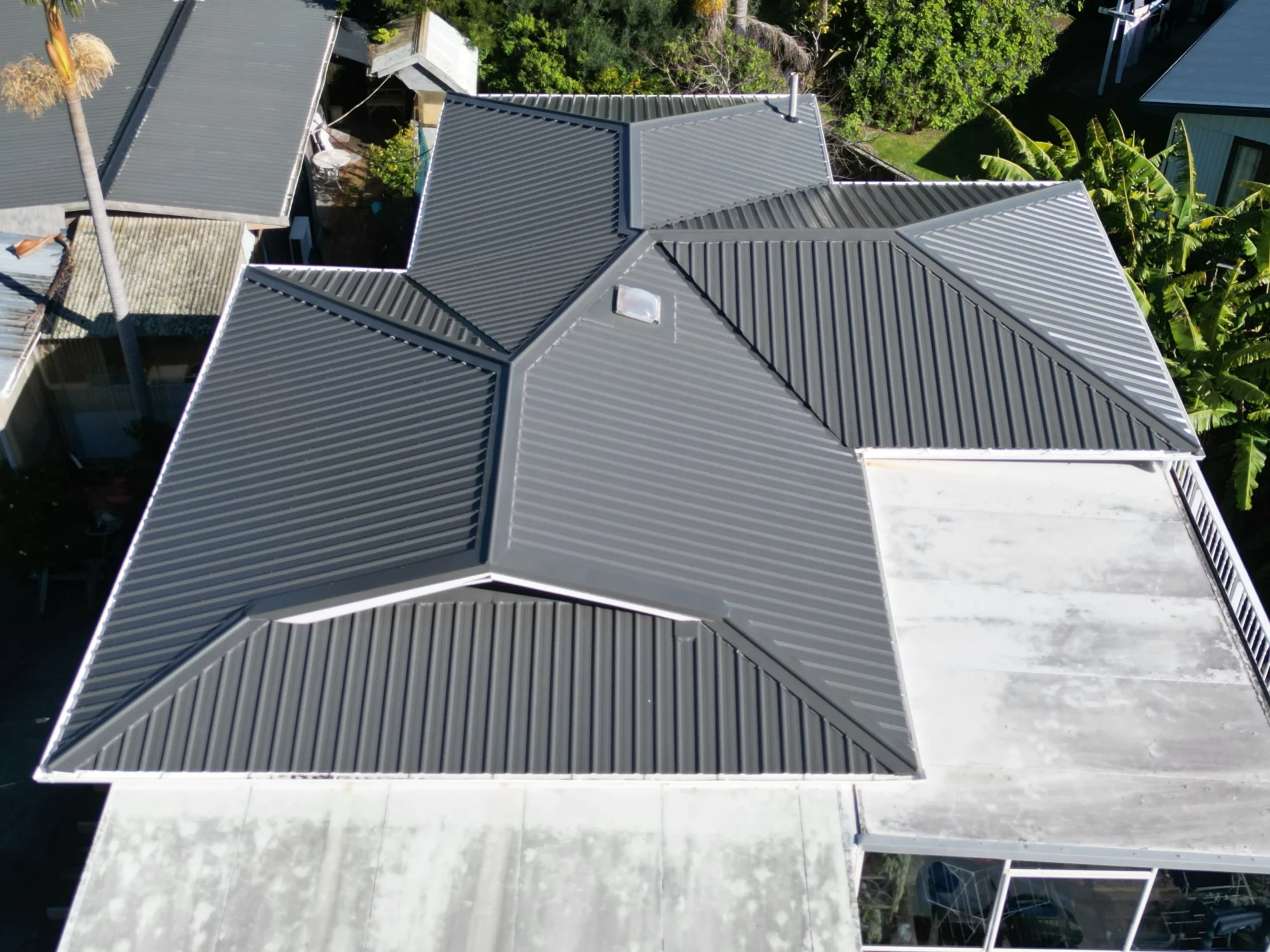
Long run roofing profiles are the shapes rolled into metal roof sheets. In New Zealand, common options include corrugate, trapezoidal and euro tray or standing seam-style profiles. Each has different characteristics that affect where and how it can be used.
The right choice depends on factors such as your roof’s pitch, the roofing system, your home’s style and your budget.
We install these profiles as part of our new metal roofing and re-roofing work across Auckland. This guide compares the main options so you can better understand what you’re looking at when reviewing a roofing quote.
What Are Metal Roofing Profiles?
A roofing profile is the cross-section of the metal sheet, including the shape, height and spacing of its ribs or seams.
Rib height and profile shape affect factors such as water-carrying capacity, spanning capability and minimum roof pitch. Deeper profiles can generally handle greater water flow than standard corrugate, but the exact performance depends on the roofing system.
The profile can also determine how the roof is fixed. Corrugate and trapezoidal profiles are generally pierce-fastened, while tray and other secret-fixed systems use concealed clips or fixings.
Material and coating are separate decisions. The appropriate material and coating also depend on factors such as the property’s location and exposure conditions, particularly around Auckland’s coastal areas.
Long Run Roofing Profiles Compared: Corrugate vs Trapezoidal vs Euro
The table below gives a general comparison of common roofing profiles in NZ. Minimum pitch requirements vary between products, so the manufacturer’s specification for the exact roofing system should always be checked before installation.
| Profile | Typical rib height | Minimum roof pitch | Purlin span | Look | Relative cost | Best use |
|---|---|---|---|---|---|---|
| Corrugate | About 16.5–17 mm, rounded waves | 8° | Shortest of the three; needs closer purlins | Classic and traditional | $ (usually the most economical) | Villas, bungalows, steeper roofs |
| Trapezoidal (5 rib) | About 27–30 mm, square-edged ribs | 3° (ribs 27 mm and taller) | Longer; stiffer ribs bridge wider purlin spacing | Crisp, modern lines | $$ (typically close to corrugate) | Low-pitch and modern homes, garages, light commercial |
| Euro tray / standing seam | About 25–30 mm raised seams, wide flat pans | 3° | Varies by system; often closer purlins or a solid substrate | Clean, flat, architectural | $$$ (more labour and folding) | Architectural homes, feature roofs, wall cladding |
Minimum pitch varies between profiles. Some qualifying trapezoidal and secret-fixed systems can be used at pitches as low as 3°, while other profiles require a greater pitch. Always follow the specification for the exact roofing product.
Pitch narrows the options first, then appearance, roofing requirements and budget can help determine the right choice. If you’re unsure of your roof’s angle, our roof pitch guide explains how roof pitch is measured and why it matters.
Not sure which profile fits?
We can check your roof pitch and framing and tell you which profiles will work before you settle on a look.
Corrugate: Is the Classic Profile Still the Right Choice?
Corrugate has been used on New Zealand roofs for generations and remains a common choice for villas, bungalows and other traditional Auckland homes.
Its rounded profile creates the familiar look associated with many older NZ houses, while modern roofing materials and coatings allow that traditional appearance to be retained when replacing an ageing roof.
- Strengths: Familiar appearance, economical compared with more architectural profiles and well suited to many traditional homes.
- Limits: Standard corrugate generally requires a steeper roof pitch than deeper trapezoidal or qualifying secret-fixed profiles.
- Watch for: Older corrugated roofs can develop issues around fixings, flashings, laps and areas where the protective coating has deteriorated.
If you plan to stay with this profile, our corrugated metal roofing page explains how HDK approaches installations and full roof replacements.
Trapezoidal Roofing: Why Is It Common on Modern Homes?
Trapezoidal roofing uses straighter, more defined ribs than traditional corrugate. The deeper profile can provide greater water-carrying and spanning capability, making trapezoidal profiles suitable for a wide range of residential and commercial roofs.
5 rib roofing is one type of trapezoidal profile, although the exact rib height, spacing and specifications vary between manufacturers and products.
- Pitch: Some trapezoidal profiles can be installed at pitches as low as 3°, while others require 4° or more. The minimum depends on the profile and rib height.
- Performance: Deeper ribs can provide greater water-carrying and spanning capability than standard corrugate.
- Look: Straight, defined lines can suit contemporary homes, garages and commercial buildings.
Trapezoidal roofing can also be considered when replacing an existing corrugated roof, but the roof pitch, framing, purlin spacing and requirements of the new roofing system need to be checked before changing profiles.
Euro Tray and Standing Seam: When Is the Premium Worth It?
Tray and standing seam-style roofing can be a good fit when the roof forms a significant part of the building’s design.
Wide, flat pans and raised seams create a clean, architectural finish. Secret-fixed systems also conceal the main roof fixings, creating a different appearance from pierce-fastened corrugate or trapezoidal roofing.
- Pitch: Some systems can be suitable for lower roof pitches, depending on the specific product and installation requirements.
- Fixing: Secret-fixed systems use concealed clips or fixings rather than exposed main roof fixings.
- Cost: These systems are typically a more expensive option because of the materials, detailing and installation involved.
- Versatility: Some profiles can continue from the roof onto exterior walls, making them a popular option for metal wall cladding on modern homes.
Wide, flat pans can also show some visible waviness, often referred to as oil canning. This is an appearance consideration worth discussing when choosing an architectural metal roofing system.
Which Roofing Profile Suits Your Auckland House Type?
Start with the house rather than choosing a profile based on appearance alone. Different Auckland house styles can lend themselves to different roofing profiles, but roof pitch and the requirements of the roofing system still need to come first.
Our free roofing guide covers some of the other decisions to consider before starting a roofing project.
Villas and Bungalows
Corrugate is a common fit for Auckland villas and bungalows, including those found throughout suburbs such as Mount Albert, Sandringham and Devonport.
If the property is within a special character area or subject to other planning requirements, check what applies before making significant changes to the roof’s appearance.
1950s to 1970s Homes and Tile Conversions
Older Auckland homes with tile roofs can sometimes be converted to long run metal roofing as part of a re-roof.
Corrugate provides a more traditional profile, while trapezoidal roofing creates straighter, more defined lines. The right option depends on the existing roof, the intended appearance and the requirements of the replacement roofing system.
Our tile to long run conversion in Chatswood shows how a tile-to-metal change can look in practice.
Modern and Low-pitch Homes
Skillion and mono-pitch designs often require a roofing profile suited to a lower roof pitch.
Trapezoidal may be an option for lower-pitch designs, depending on the exact roof pitch and product specification. Euro tray and standing seam-style systems can also suit modern architectural homes where the roof forms a visible part of the design.
Coastal Properties
Homes near Auckland’s harbour and open coast, including areas such as Devonport and Belmont, need roofing materials, coatings and fixings suited to the property’s exposure conditions.
The right roofing specification matters just as much as the profile, so consider the property’s environment before settling on a particular material, coating or colour.
How Do Colour and Coating Affect Your Choice?
Colour and coating are separate decisions from the roofing profile, but they contribute to the final appearance and performance of your metal roof.
- Heat: Lighter and darker roof colours absorb and reflect solar heat differently, which can affect roof surface temperatures.
- Appearance: Corrugate, trapezoidal and tray profiles each create different lines and shadows across the roof.
- Rules: Some subdivisions, covenants and planning requirements can affect the colours or finishes available for a property.
- Matching: Spouting, flashings and downpipes can be matched or contrasted with the roof. HDK can also handle spouting installation as part of the project.
Choose the roofing system and profile first, then consider the colour and finish that work best with the property.
Get Your Long Run Roof Quoted
Long run roofing specialists for homes across north, west, east and south Auckland.
Frequently Asked Questions
What is the most common long run roofing profile in NZ?+
Corrugate and trapezoidal are two common long run roofing profiles used in New Zealand. Corrugate is commonly seen on traditional homes, while trapezoidal profiles are used across modern homes, garages and commercial buildings.
What is the minimum roof pitch for long run roofing in NZ?+
It depends on the profile. Standard corrugate generally requires a minimum pitch of 8°. Trapezoidal profiles can have minimum pitches of 3° or 4° depending on their shape and rib height, while qualifying secret-fixed and standing seam systems can also be suitable from around 3°.
The manufacturer’s specification for the exact roofing product should always be followed.
Is 5 rib roofing the same as trapezoidal roofing?+
5 rib roofing is a type of trapezoidal roofing profile. The exact rib height, spacing, cover width and minimum pitch vary between products and manufacturers, so compare the specification of the roofing product being considered.
Can I change my roofing profile when I re-roof in Auckland?+
Potentially. Changing from corrugate to trapezoidal or another long run profile depends on the existing roof pitch, framing, purlin spacing and the requirements of the new roofing system.
HDK can check the existing roof and discuss suitable options as part of the quote.
Which roofing profile is the cheapest?+
Corrugate is generally one of the more economical long run roofing options, while architectural tray and standing seam-style systems typically cost more.
The final price also depends on roof size, access, flashings, materials, coating and the work required for your property. Contact HDK Long Run Roofing for a free roofing quote before making your decision.


