
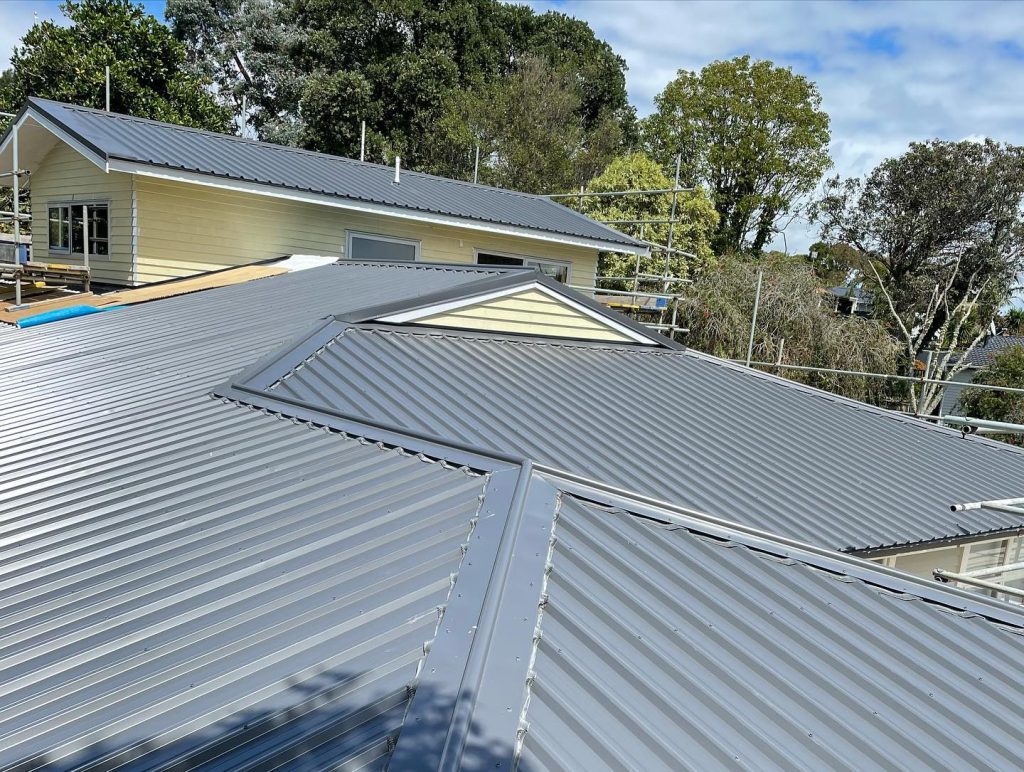
Roof pitch is the angle of your roof’s slope, measured in degrees, and it is one of the most critical decisions for any Auckland home or commercial build. In New Zealand, where Auckland can receive over 1,200mm of rainfall annually, the correct roof pitch determines how quickly water clears, which metal profiles are compatible, and whether your roofing warranty remains valid. Most long-run metal roofing in Auckland requires a minimum pitch of 3 to 8 degrees depending on the profile, with corrugated iron typically needing at least 8 to 10 degrees for reliable performance.
Whether you are designing a new build, planning a re-roof, or trying to understand why your current roof is underperforming, this guide covers the seven reasons why getting your roof pitch right protects your property for decades to come.
To put it simply, when we talk about roof pitch, we are describing the steepness or slope of your roof. In New Zealand, and specifically when dealing with the high rainfall we often experience, we usually measure this in degrees. It is the vertical rise divided by the horizontal span. While it sounds like a high school maths problem, it is the most critical decision for any residential or commercial project.
This angle dictates which materials are physically capable of keeping the water out and how effectively your spouting system in Auckland can handle the runoff. This roof pitch guide helps you see that a steep slope allows water to shed almost instantly, while a shallower one requires much more attention to the laps and seals of the metal.
Understanding what a pitched roof is involves recognising that anything with a slope over about 10 degrees starts to look like a traditional triangle. For homeowners, these steeper angles are often part of a home’s heritage charm or a bold design statement. However, modern commercial warehouses often opt for much lower angles to save on internal heating volume. No matter the style, the angle remains the heartbeat of the structure’s drainage system.
When you ask a builder what roof pitch is and why it matters, they will likely point to the sky. Water is a roof’s greatest friend and its biggest enemy. A steeper angle uses gravity to pull water down and away before it has a chance to find a tiny gap. In our climate, where we can have four seasons in a single morning, your roof needs to be ready for a sudden deluge. A well-calculated angle ensures that wind-driven rain does not get pushed back up under the ribbing of the metal sheets. This is why knowing the minimum roof pitch is so vital for the building’s structural integrity.
If you go too low without the right profile, you are asking for trouble. Most people are surprised to learn that even a “flat” roof isn’t actually flat. It must have a slight fall to prevent ponding. If water sits on steel for too long, even the best coatings will eventually face challenges. This is where a comprehensive roof pitch guide, and a conversation with our re-roofing team in Auckland, becomes your best asset during the design phase. It ensures that the rainwater flows directly into the guttering system rather than remaining in place and causing rust or structural damage.
The relationship between the shape of the steel and the slope is a tight one. Some long-run profiles are designed specifically for those sleek, low-angle designs seen in contemporary architecture. When people ask what roof pitch is in the context of metal, they are often looking for the sweet spot between aesthetics and performance. A corrugated profile usually needs a steeper slope than a tray-style profile with high ribs. This is because the higher ribs can carry a larger volume of water without it overflowing into the building.
In our coastal environment, sea salt is a major factor. The salt spray travels a long way inland, even if you can’t see the ocean from your front door. When you understand what roof pitch is, you also understand how your roof cleans itself. A steeper slope allows every rain shower to wash away salt deposits and dust. This natural maintenance cycle is built into the design of the house. This roof pitch guide suggests that if you live within a few kilometres of the coast, a bit of extra slope can extend the life of your roofing material significantly.
For commercial buildings, the stakes are even higher. A massive roof area collects a staggering amount of water. If the designer hasn’t correctly calculated the roof pitch for a large-scale warehouse, the internal gutters can become overwhelmed. This isn’t just about a few drips; it’s about protecting inventory and machinery.
This is why we see so many industrial zones using specific long-run profiles that can handle the volume, even when the angle is quite shallow. If you are a business owner, knowing what a pitched roof is versus a low-pitched one helps you plan for future maintenance budgets and long-term security.
Our building codes are quite clear on these matters. They aren’t trying to be difficult; they are based on decades of seeing what happens when the wind catches a roof just right. If you ignore the rules regarding roof pitch, you risk the wind lifting the sheets or pushing water through the overlaps. Every roofing product has a limit. When someone asks what the minimum roof pitch is, they are looking for the “red line” where a product stops being effective.
For some standing seam profiles, you can go as low as 3 degrees, which looks almost flat to the naked eye. However, for standard corrugated iron, you generally don’t want to go below 8 or 10 degrees. Knowing what a pitched roof is versus a low-slope roof helps you choose a contractor who knows how to handle the specific flashings required for each. It is always better to design with a little bit of a safety margin rather than trying to hit the absolute minimum.
Whether you are starting a new metal roofing project in Auckland or upgrading an existing workshop, the angle of your roof will be one of your most lasting decisions. It affects your insulation, your solar panel efficiency, and even your attic space. When you finally grasp what roof pitch is, you start to see your home as a complete system rather than just a lid. Use this roof pitch guide as a starting point for a conversation with your roofing professional.
Don’t be afraid to ask technical questions. A good team will be happy to explain what a pitched roof is in the context of your specific site and wind zone. They will help you navigate the tricky waters of the minimum roof pitch to ensure your project is fully compliant and built to last.
Your roof is the primary shield for your biggest investment, so getting the angle right is the first step towards long-term peace of mind. By taking the time to understand what roof pitch is, you are ensuring your property remains dry and secure for decades to come.
Deciding on the right slope for your property is a move that pays off for decades. When you truly understand what roof pitch is, you empower yourself to make better choices for your home’s future. Our team at HDK Long Run Roofing is here to help you navigate every detail, from the initial roof pitch guide to the final installation. We know exactly what the pitched roof requirements are for Auckland’s unique climate and will ensure your project meets the minimum roof pitch standards for total protection.
Reach out to HDK Long Run Roofing to ensure your next project stands the test of time.
EXCELLENTTrustindex verifies that the original source of the review is Google. Absolute killer team! Contacted Jesse for a quote, he had organised a site assessment, drew up a quote and executed the job very quickly. I wouldn’t look anywhere else. These guys will help you all the way through! CheersPosted on GoogleTrustindex verifies that the original source of the review is Google. Garage side roof replacement. We reached out to several companies to inspect our roof and obtain quotes. It was challenging to get in touch with people since it was a mid-sized job and roofers are super busy. Jesse stood out as one of the best due to his prompt communication and very easy to deal with. Jesse and his team did an excellent job, delivering top-quality craftsmanship.Posted on GoogleTrustindex verifies that the original source of the review is Google. I had an outstanding experience with HDK Long Run Roofing. Their punctuality, clear communication, affordability, professionalism, speed, and friendliness were truly commendable. The end results exceeded our expectations, showcasing their dedication to quality work. I highly recommend their services.Posted on GoogleTrustindex verifies that the original source of the review is Google. Jesse and his team were great to deal with. They turned up on time, did the job expertly and efficiently, and invoiced as per the quote. Couldn’t have asked for anything more. Cheers HDK.Posted on GoogleTrustindex verifies that the original source of the review is Google. HDK replaced our entire roof and they did an absolute top job. Worked hard and committed to get it done in a timely manner and great guys to work with. Thanks all!Posted on GoogleTrustindex verifies that the original source of the review is Google. Full re-roof (iron) on my owner occupied 1920s home. Fantastic service from first contact right through to checking in following completion. The cheerful nature, quality of workmanship and professionalism made having Jesse’s team and their contracted scaffolders a pleasure to have on site. As a female home owner I’m always nervous about dealing with trades unless referred from friends and family, I could not recommend HDK highly enough and wish I’d engaged with them sooner. Love the sound of rain on the roof now I don’t have to worry about the leaks :)Posted on GoogleTrustindex verifies that the original source of the review is Google. What a cheerful respectful professional team. I have absolutely no hesitation in recommending this crew to others. Thanks Jesse and Trinity you made a potentially stressful job a breeze.Posted on GoogleTrustindex verifies that the original source of the review is Google. Replaced the roof with speed, efficiency, neatness and cheerful good humour. Jesse and his team are a pleasure to deal withPosted on GoogleTrustindex verifies that the original source of the review is Google. Amazing service and communication with this team. They really go above and beyond with their work and I would definitely recommend using them!
Roof pitch is the angle of your roof slope measured in degrees. In Auckland’s high-rainfall climate, the correct pitch determines how fast water drains and which roofing materials are suitable.
For most long-run metal roofing in Auckland, a pitch between 8 and 15 degrees offers the best balance of water drainage and visual appeal, depending on the profile selected.
A pitched roof has a visible slope, usually over 10 degrees, that sheds water using gravity. A flat or low-slope roof uses high-rib metal profiles to manage water at minimal angles.
Yes. In New Zealand, minimum roof pitch depends on the profile. Standing seam can go as low as 3 degrees, while standard corrugated iron typically requires at least 8 to 10 degrees.
Use a digital angle finder or a smartphone pitch app placed on the underside of the rafters or directly on the roof surface. A licensed roofer can also measure it during an inspection.
Yes. New Zealand insurers and building inspectors require roofs to meet minimum pitch standards. A roof that falls below the required angle for its profile may be considered non-compliant and affect your cover.