
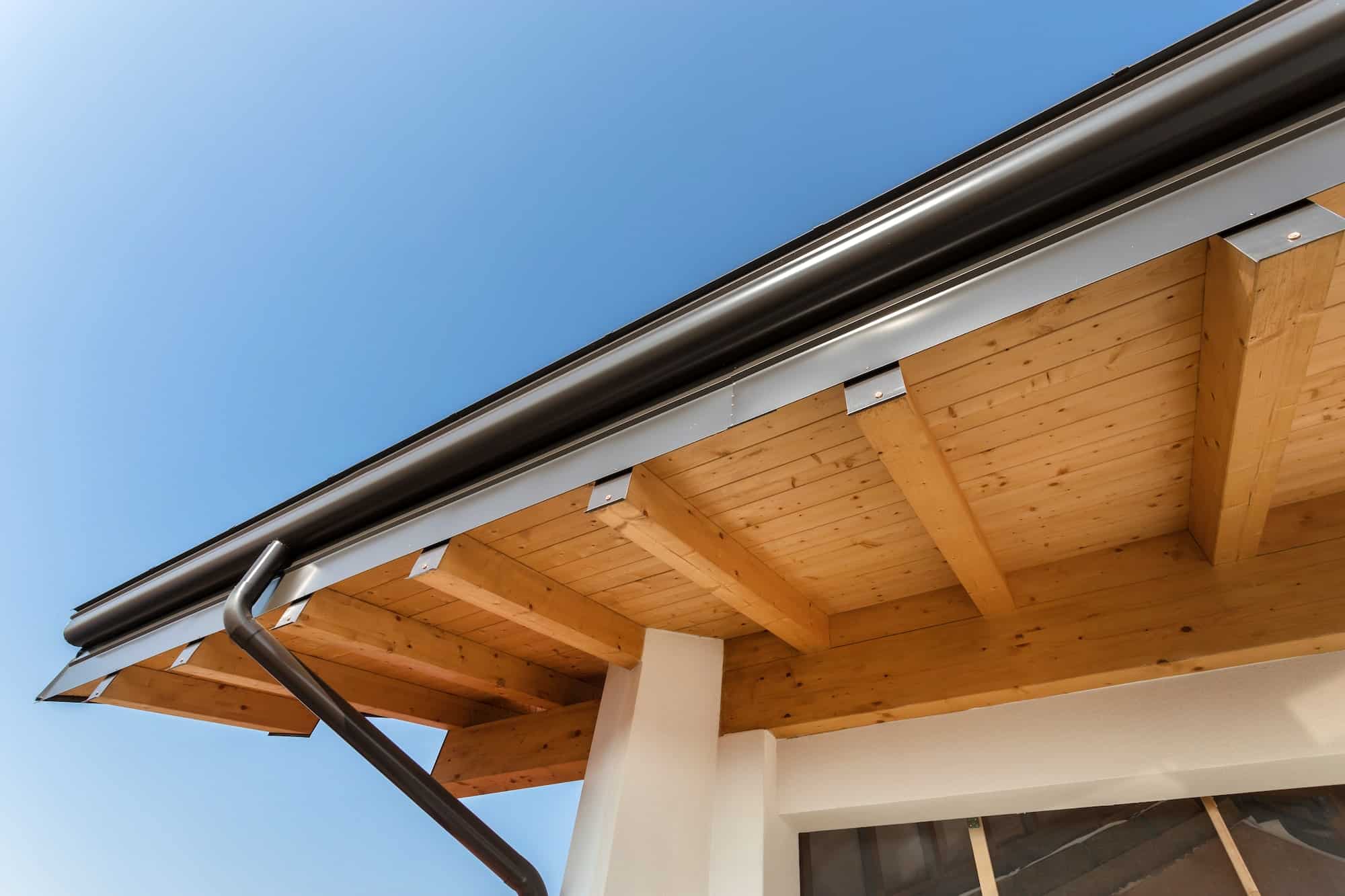
If your roof is due for replacement, it is worth assessing the spouting at the same time. Replacing both in one job can be a more cost-effective, tidier option because the roof and spouting work together as part of the same water-management system.
We get asked about this on re-roof quotes across Auckland: can the spouting wait another year or two? Sometimes it can. But when it is already ageing or showing signs of wear, replacing it later can mean another round of access, scaffolding and work around the finished roof edge. If you are still deciding, our guide to spouting repair or replacement covers which faults are worth repairing and when replacement makes more sense.
Why is spouting replaced with the roof rather than after it?
The roof edge, flashings and spouting work together to direct water away from the building. When they are replaced as part of the same project, each component can be planned and installed together rather than working around finished roofing later.
The scaffolding is already up
Scaffolding and edge protection can be a significant part of a re-roofing project, particularly on two-storey homes. Replacing the spouting while that access is already in place can avoid the need for another scaffolding set-up later.
The flashings only need to be detailed once
Fascia, barge and apron flashings interact with the roof edge and spouting. Replacing the roof and spouting together allows these junctions to be considered as part of the same job.
Our guide to roof flashing in NZ explains how flashings help manage water around roof junctions and edges.
Colour matching is easier
Coated steel naturally weathers over time. Spouting installed several years after a roof may therefore look slightly different, even when a similar colour is selected.
Ordering the roof and spouting together makes it easier to achieve a consistent finish. Our article on whether spouting should match the roof or house looks at the different approaches in more detail.
The whole system is renewed at the same time
When the roof and spouting are replaced together, the entire water path is renewed at the same time. Leaving ageing spouting and fascia alongside a new roof can leave an older component as the weak point in an otherwise new system.
Replacing both together also allows the roof edge, flashings, spouting and downpipes to be considered as parts of the same water-management system.
What does adding spouting to a re-roof involve?
When spouting is included in a re-roof, the crew, scaffolding and site set-up are already in place, allowing the work to be coordinated as part of the same project.
The work may include:
- Removing the old spouting, downpipes and brackets while the existing roof is being removed
- Checking the fascia and identifying timber that needs attention
- Setting the correct fall towards the downpipe outlets
- Fitting the new spouting and downpipes
- Completing the roof-edge and flashing details
- Making sure the roof is watertight at the end of each working day
We only open up the sections of roof that can be replaced and made watertight that day. This allows a long run re-roof in Auckland to be completed while keeping the property protected throughout the project.
What can doing the spouting later add to the job?
Separating the roof and spouting into two projects can mean repeating work that could otherwise be coordinated at the same time.
- Scaffolding and edge protection: may be required again for the second project
- Access and set-up: another mobilisation and round of site disruption
- Flashing work: finished roof-edge details may need to be worked around or reopened
- Colour matching: newer coated steel may look different alongside a weathered roof
- Water management: ageing spouting remains alongside the new roofing system
We do not publish general pricing because every roof and spouting replacement is different. Roof area, pitch, storey count, access, spouting profile and the condition of the fascia can all affect the scope.
We can provide an initial estimate before confirming the requirements with an onsite quote. Costs are agreed before work begins, so you know what is included in the scope.
A Westmere roof and spouting replacement
One of our Westmere projects involved replacing an ageing roof and spouting as part of the same job. The two-day project involved removing the old roofing and installing marine-grade coated corrugated steel, along with new flashings and work around the roof edge.
Once the old roof was removed, two issues became apparent. The purlins required additional fixings to strengthen the roof framework, and a bathroom vent pipe was terminating inside the roof space rather than passing through the roof. We reinforced the purlins and extended the vent pipe through the new roof with a watertight exit.
It is a good example of why a re-roof involves more than simply replacing the metal sheets. Removing the existing roofing gives us an opportunity to inspect concealed areas, address problems and coordinate the finished roof system before everything is closed up again.
See the full Westmere roof and spouting replacement project.
Does spouting always need replacing with a re-roof?
Not necessarily. If the existing spouting is still in good condition, replacing it simply because the roof is being replaced may not be necessary.
Our team can assess both as part of the re-roofing quote and explain what can remain and what is worth replacing.
Where the spouting does need replacing, completing the work alongside the re-roof allows the roof edge, flashings and spouting to be planned as one system. You can read more about spouting installation in Auckland and what is involved.
Signs such as corrosion around roof fixings, leaks appearing in different areas or a roof that has already undergone multiple repairs can indicate that a more complete assessment is worthwhile.
If your existing property has a tile roof, HDK can also assess it for a tile-to-long-run-metal conversion as part of a re-roofing project.
Talk to HDK about your roof and spouting
Replacing your roof and spouting together can mean one scaffolding set-up, coordinated flashings and a consistent finish from the roof edge to the downpipes.
Our LBP-qualified team specialises in long run metal roofing across Auckland. We can assess the condition of your existing roof and spouting, explain what needs replacing and provide a clear quote for the work.
Call today for a free quote on 09 886 4625 or download the free roofing guide if you are still considering your options.
Frequently Asked Questions
Do you need new spouting with a new roof?
Not always. If the existing spouting is sagging, showing signs of corrosion or otherwise nearing the end of its useful life, replacing it during the re-roof can avoid completing the work as a separate project later. HDK Long Run Roofing can assess its condition as part of the re-roofing quote.
Is it cheaper to replace the roof and spouting at the same time?
It can be. Completing both together may mean scaffolding, access and site set-up only need to be arranged once. It also allows the roof-edge and flashing details to be coordinated as part of the same project.
How long does a roof and spouting replacement take in Auckland?
The timeframe depends on the size and pitch of the roof, property access, storey count and whether additional work is identified once the existing roofing is removed. HDK will confirm the expected project timeframe as part of the quoting process.
How much does a roof and spouting replacement cost in NZ?
The cost depends on factors including the roof area, access, roof pitch, spouting requirements and the condition of the existing fascia. We do not publish general pricing because each project is different. HDK can provide an estimate followed by an onsite quote, with the scope and costs confirmed before work begins.
Can you replace spouting on a tile roof?
HDK specialises in long run metal roofing and does not supply, install or repair tile roofing. We can convert an existing tile roof to long run metal, with new spouting included where required as part of the project.
Will my house stay watertight during the re-roof?
We plan the work so that sections opened during the re-roof can be replaced and made watertight before the crew leaves site each day.


