
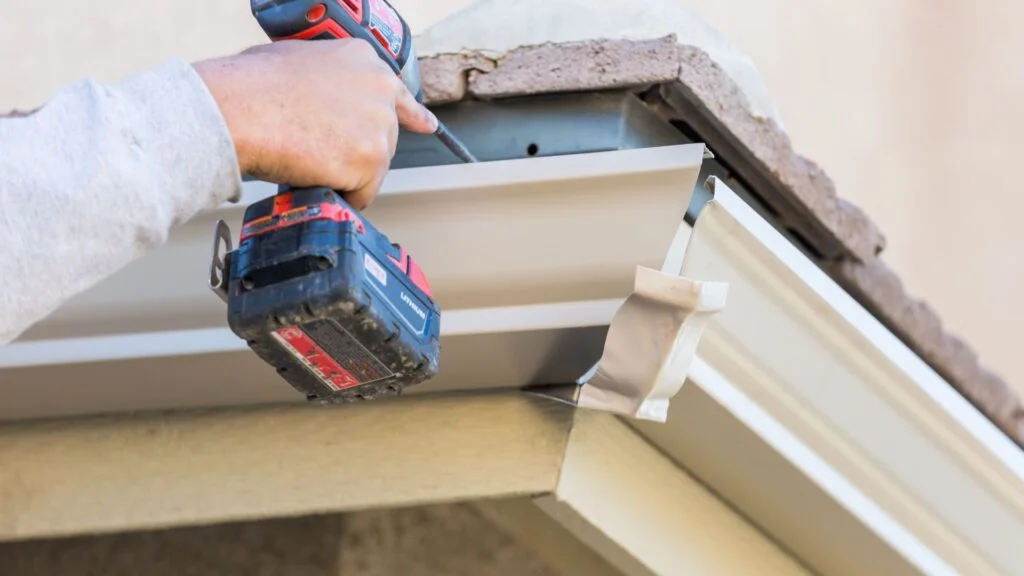
Most spouting (guttering) faults can be repaired when the run itself is sound and the problem is isolated, such as a failed joint, blocked outlet or bracket that has let go. Replacement may make more sense once rust, sagging or failing fixings show up along the whole length, as repeated repairs can become less worthwhile when the system is already deteriorating.
This guide covers the failure signs Auckland homeowners see most often, how to tell a one-off fault from a wider problem, and why the timing of your next re-roof can change the answer.
The failure signs worth acting on
Spouting rarely fails without warning. The signs below can appear before water finds its way into the fascia or surrounding areas, and many are visible from the ground on a wet day.
- Water spilling over the front edge: Overflow in steady rain, not just in a downpour, can indicate that the run is blocked, undersized or sitting at the wrong fall.
- Sagging or an uneven line: A dip between brackets can mean the fixings have pulled away from the fascia or there is an issue with the timber behind them.
- Rust staining at joints: Rust can develop around joins, stop-ends and outlets where water tends to sit.
- Marking on the fascia or wall: Dark streaks or peeling paint under the spouting can indicate that water has been running behind it rather than through it.
- Leaks where the downpipe connects: Drips at the downpipe outlet can point to a failed seal or corroded outlet rather than a problem with the whole run.
Water tracking behind the spouting is particularly worth taking seriously. Fascia timber can hold moisture, so the condition of the fascia and fixings should be checked rather than looking at the spouting alone.
What is genuinely worth repairing?
A repair can be the right call when the fault is local and the rest of the system is in good order. On Auckland homes, that can include:
- Resealing or replacing a single joint or stop-end
- Re-fixing or adding brackets where a section has dropped
- Correcting the fall on a run that holds water
- Replacing a corroded outlet or damaged downpipe section
- Clearing and re-sealing an internal gutter where the surrounding system is otherwise in good condition
Internal gutter repair sits slightly apart from the rest. An internal gutter runs inside the roofline rather than along the edge, so a failure can allow water into the building instead of over the side. Small faults may be repairable, but an internal gutter is worth inspecting properly before deciding whether a repair is enough. Our guide to box gutters in NZ covers sizing, fall and why internal gutters leak.
When replacement makes more sense
Replacement becomes worth considering once the faults stop being isolated. If the same run needs attention in more than one place, or the fixings and spouting are deteriorating at the same time, continuing to make individual repairs may not be the most practical option.
Rust along the run, not just at the joins
Corrosion that has spread beyond individual joints can indicate that the protective coating is deteriorating. Patching one affected section may not address corrosion developing elsewhere along the run.
Fixings failing in more than one place
When brackets are pulling away at several points, the fascia should be assessed as well. New or repaired spouting will not solve an underlying problem with deteriorated fascia, so both need to be considered before deciding on the work required.
The system is undersized for the roof area
Some older Auckland homes may have spouting that no longer suits the roof area, particularly where an extension or additional roof area has been added.
A repair cannot increase the capacity of an undersized system. If overflow continues when the spouting is clear, the fall, outlets and capacity of the system should be assessed.
Should you replace your roof and gutters together?
If a re-roof is on the cards in the next couple of years, it is worth considering the roof and spouting together. The roof edge, flashings and spouting meet at the same point, so completing both as one project can reduce duplicated work.
- One set-up and one round of scaffolding or edge protection rather than arranging access twice
- Fascia and barge timber can be checked while the roof edge is exposed
- Profile and colour can be coordinated across the roof and spouting
- New spouting does not need to be worked around during a later re-roof
The order matters too. Replacing the spouting first and re-roofing soon afterwards can mean returning to the same roof edge and potentially disturbing recently completed work.
If your metal roof is also approaching replacement, read more about our re-roofing services in Auckland.
How long does the work take?
The timeframe depends on the scope of the work, the number of storeys, access and whether any fascia work is uncovered once the existing spouting is removed.
Smaller repairs will generally take less time than a full replacement. Weather can also affect scheduling, particularly where dry conditions are needed to complete joints, fixings and surrounding work properly.
What does it cost to have someone look?
Nothing, in our case. HDK Long Run Roofing provides free quotes across Auckland. When assessing the spouting, we also look at the surrounding fascia and roof edge where relevant, as the condition of each can affect what work is required.
Costs vary with the length of the run, the profile, the number of downpipes, access and whether any fascia needs replacing. We provide the cost in writing before work begins.
If a re-roof is likely within the next few years, it is worth considering both scenarios. You can compare a new spouting installation on its own with completing the work alongside a full re-roof.
Getting the decision right the first time
Spouting plays an important role in directing water away from the fascia, soffit, cladding and surrounding areas of the home. Addressing problems before they spread can help prevent damage beyond the spouting itself.
Our free roofing guide covers what to look for. You can also see how roof-edge details have been handled on a real Auckland home in our Westmere roof and spouting makeover.
If your spouting is overflowing, sagging or rusting at the joins, get it looked at before the problem spreads. HDK Long Run Roofing specialises in long run metal roofing across Auckland. Our LBP-qualified team can assess the condition of the roof and spouting and explain whether a repair, replacement or planned re-roof makes more sense.
Call 09 886 4625 today for a free quote, or request a quote online.
Frequently Asked Questions
Is repair or replacement cheaper?
A single repair will generally involve less work than a full replacement. However, replacement may make more sense when the same run needs attention in several places or corrosion has spread beyond isolated joints. The condition of the overall system needs to be considered.
How do I know if it needs replacing or just repairing?
Look at whether the fault is isolated. One leaking joint or dropped bracket may be repairable. Rust along the run, sagging in several places or recurring overflow can point to a wider problem that should be assessed.
Can spouting be replaced without replacing the roof?
Yes. Spouting can be replaced on its own. If a re-roof is likely within the next few years, it is worth considering both together to avoid repeating work around the same roof edge.
Why does it overflow when it is not blocked?
The fall, outlet arrangement or capacity of the system may be contributing to the problem. A run that is not falling correctly can hold water instead of directing it towards the outlets, while an undersized system may struggle to handle the roof area.
What is internal gutter repair?
Internal gutter repair involves work on a gutter that runs inside the roofline rather than along the outside edge. Repairs may be possible, but because a failure can allow water into the building, the cause and condition of the surrounding system should be properly assessed first.
Do you charge to quote this work in Auckland?
No. HDK Long Run Roofing provides free quotes across Auckland. Where relevant, we also assess the surrounding fascia and roof edge so the quote reflects the work required.


