
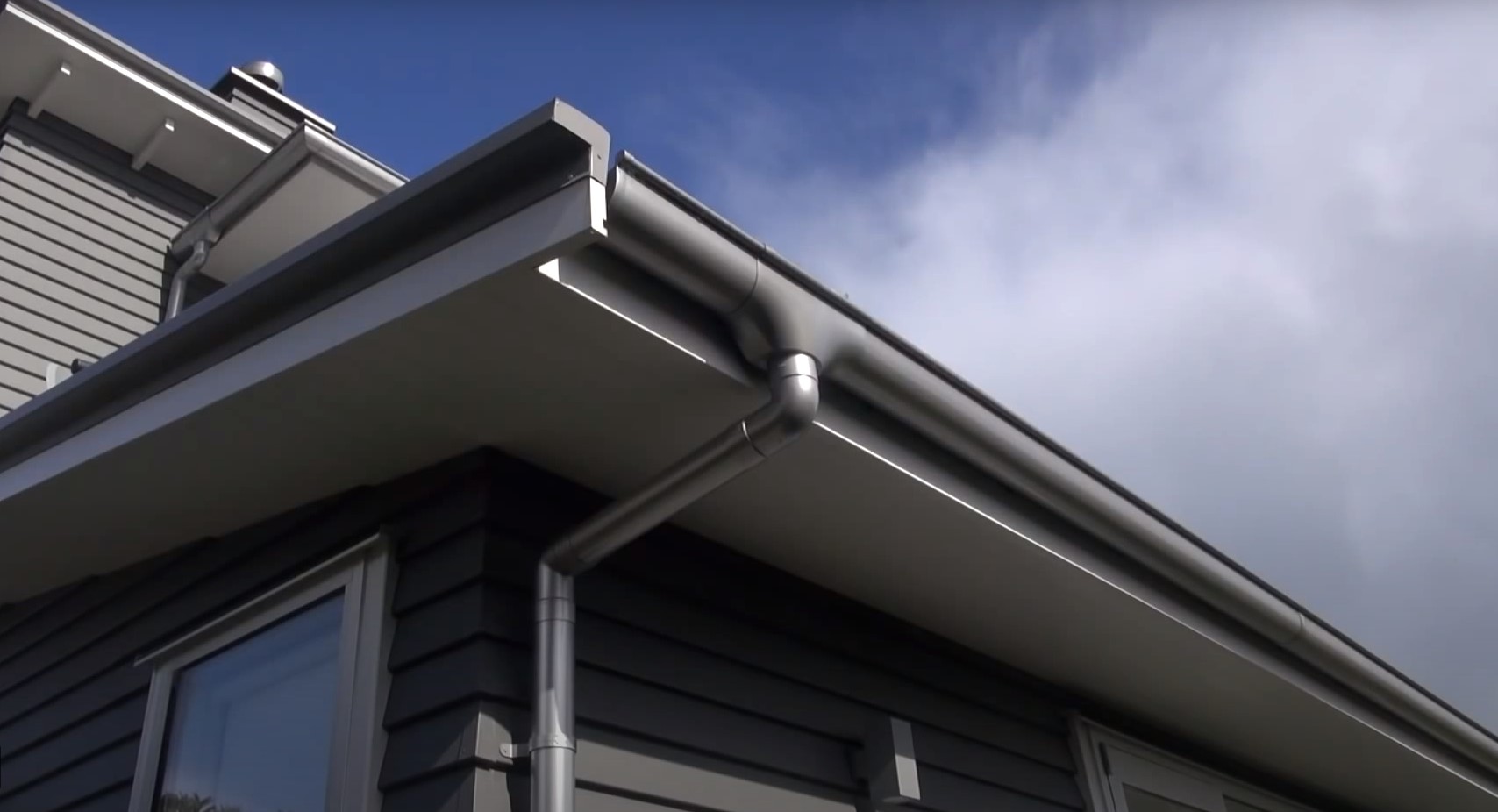
A roof can collect thousands of litres of rainwater, but moving that water off the roof is only part of the job. Good downpipes installation provides a clear route from the gutters towards the appropriate stormwater discharge point.
For Auckland homes and commercial buildings, downpipes need to work with the roof, gutters, outlets, and wider stormwater system. Roof area, local rainfall intensity, gutter capacity, pipe size, and outlet position can all affect how efficiently rainwater moves away from the property.
This means choosing the right drainage setup is not simply a matter of finding a pipe that fits the gutter. Sizing, positioning, materials, installation requirements, and the existing drainage arrangement all need to be considered.
What Does Downpipes Installation Involve?
A downpipes installation involves selecting, positioning, supporting, and connecting rainwater pipes so water can move efficiently from the roof gutters towards the appropriate stormwater system.
Before new downpipes are fitted, the roof drainage arrangement should be considered as a whole. This includes:
- Roof Catchment Area: The amount of roof area feeding each gutter run.
- Gutter Size and Capacity: Whether the gutter can manage the expected volume of roof water.
- Outlets: The number and position of the outlets connecting the gutters to the downpipes.
- Downpipe Size: Selecting the correct downpipe size, shape and profile.
- Stormwater Connection: The available route towards the appropriate stormwater discharge point.
- Material Compatibility: Checking compatibility between roofing, gutters, fixings and downpipes.
- Site Access: Factoring in the building height, access requirements and future maintenance considerations.
For Auckland properties, local rainfall also needs to be considered. A downpipe arrangement suitable for a small residential roof may not provide sufficient capacity for a larger home or commercial building.
How Do Gutters and Downpipes Work Together?
Gutters and downpipes form a connected drainage path.
Roof → Gutters → Outlets → Downpipes → Stormwater drainage
Rain lands on the roof, travels into the gutter and moves towards an outlet. The downpipe then carries that water towards the property’s stormwater drainage system.
Each component needs sufficient capacity for the water it receives. For example, installing a larger gutter does not necessarily solve an overflow problem if there are too few outlets or if the downpipes cannot move the water away effectively.
The same principle applies when an old roof is replaced. If you are considering re-roofing in Auckland, it is a good opportunity to assess the existing rainwater system. Older gutters and downpipes should not automatically be carried over to a new long run metal roof. Their condition, outlet arrangement and capacity should be assessed against the new roofing system before deciding whether they can be retained.
How is the Right Downpipe Size Determined?
Downpipe size should be based on the drainage requirements of the property, rather than simply matching what was previously installed.
| Factor | How It Affects Sizing |
| Roof Area & Pitch | The amount of roof area feeding the drainage system affects how much water needs to be managed. |
| Rainfall Intensity | Local rainfall intensity needs to be considered when determining drainage capacity. |
| Gutter Capacity | Gutters, outlets and downpipes need to work together as part of the same drainage system. |
| Outlet Quantity | The number and position of outlets affect how roof water is distributed between downpipes. |
A large residential or commercial roof does not necessarily need one oversized downpipe. Depending on the design, multiple correctly positioned outlets and downpipes may provide a more suitable arrangement.
The pipe route matters as well. Bends and offsets are sometimes required to carry water from the gutter outlet around eaves or other building features before reaching the stormwater connection. Under relevant New Zealand Building Code compliance pathways, roof gutters and downpipes are considered together to determine drainage capacity.
What Requirements Apply to Downpipes in New Zealand?
Roof drainage systems need to support compliance with the New Zealand Building Code, including Clause E1 Surface Water.
- E1/AS1 Acceptable Solution: E1/AS1 provides an Acceptable Solution for qualifying buildings and sitework, including provisions relating to roof gutters and downpipes.
- Complex Projects: Its scope does not cover every type of property or drainage design. Larger or more complex projects may require a different compliance pathway or project-specific drainage design.
In practical terms, downpipes installation needs to consider more than how neatly the pipe sits against the building’s exterior.
The wider drainage arrangement may need to consider gutter and outlet capacity, pipe sizing, suitable materials, fixing, stormwater disposal and overflow management. Internal downpipes and more complex commercial roof drainage systems can require additional consideration because drainage issues may affect areas within the building.
Which Downpipe Materials are Available?
Common rainwater drainage systems across New Zealand can use PVC, coated steel, aluminium, copper and stainless steel. The appropriate option depends on the roofing system, the surrounding environment, architectural requirements and the materials already used elsewhere on the building.
Material compatibility is particularly important with metal roofing. Certain combinations of metals can contribute to corrosion when moisture is present. Roofing, gutters, downpipes, fasteners and adjoining components need to be selected with material compatibility in mind. For long run steel roofs, a coordinated metal rainwater system can also provide a consistent finish across the property.
Are COLORSTEEL® Downpipes Suitable for Auckland Properties?
COLORSTEEL® downpipes can be suitable alongside coated steel roofing, subject to the particular product, exposure conditions, coating specification and compatibility with surrounding components.
Matching the downpipes with the roof and gutters can create a consistent colour scheme across the property. Alternatively, a contrasting colour can be used where it suits the building design.
Appearance is only one consideration. Auckland includes a range of environmental exposure conditions, including coastal locations. The appropriate product, coating and compatible fixings should therefore be selected for the property’s particular environment.
How Much Does Downpipe Installation Cost in NZ?
There is no single, fixed price that applies to every downpipes installation in New Zealand because the scope can vary considerably between properties.
Replacing a single, accessible downpipe connected to an existing gutter and suitable stormwater connection is a different job from installing new spouting, outlets and downpipes across an entire multi-storey property.
The cost depends on several variables:
- The number and size of downpipes required.
- The downpipe material and profile.
- Building height, roof pitch, and site access.
- The length of each downpipe and the number of bends and offsets.
- Any required alterations to existing gutter outlets.
- The condition of the existing spouting.
- Scaffolding or other access requirements.
- Stormwater connection requirements.
- Whether the work forms part of a new roof installation or a wider re-roofing project.
Spouting, gutters and downpipes installed as part of a wider roofing project create a different scope from replacing an individual downpipe.
Site-specific quote provides a more useful figure than a generic, standard per-downpipe price.
FAQs About Downpipes Installation
How many downpipes does a roof need?
There is no standard number that applies to every roof. The required number depends on factors such as roof catchment area, rainfall intensity, gutter capacity, outlet positions and downpipe dimensions.
Can another downpipe be added to an existing gutter?
Potentially. An additional outlet and downpipe may improve drainage, but the existing gutter, proposed outlet position and available stormwater connection should be assessed first.
How do I know what size downpipe I need?
Downpipe sizing depends on factors including roof catchment area, rainfall intensity, gutter capacity and the number and position of outlets. Gutters and downpipes should be considered together rather than sizing the pipe in isolation.
Should gutters and downpipes be replaced together?
Not always. Existing components may be retained if they are suitable and in good condition. However, assessing gutters and downpipes together makes sense because they form part of the same roof drainage system.
Are COLORSTEEL® downpipes suitable for Auckland properties?
They can be suitable alongside coated steel roofing, subject to the selected product, environmental exposure, coating specification and compatibility with the surrounding roofing components.
Can downpipes connect to wastewater drainage?
Roof rainwater needs an appropriate stormwater discharge arrangement. The intended stormwater connection should be established when planning the installation.
How much does downpipe installation cost in NZ?
The cost varies according to the number and size of downpipes, materials, building access, gutter alterations, stormwater connections and whether the work forms part of a larger roofing project. A site-specific quote is needed for an accurate price.
Can existing downpipes be kept when re-roofing?
Potentially. Existing downpipes may be retained if their condition, capacity, materials and connections are suitable for the new roofing system. Re-roofing is a useful time to assess the complete rainwater system.
Planning Downpipes Installation in Auckland?
A well-planned roof drainage system moves rainwater from the roof, through the gutters and downpipes, and directly towards the intended drainage point.
If you are planning a downpipes installation as part of a new long run roof, re-roof, or rainwater system upgrade, HDK Long Run Roofing can assess how the downpipes fit into the wider roofing system. From long run metal roofing and re-roofing to coordinated spouting and downpipes, HDK works across Auckland on residential and commercial roofing projects.
Get in touch with HDK Long Run Roofing to discuss your roofing and downpipe requirements.


